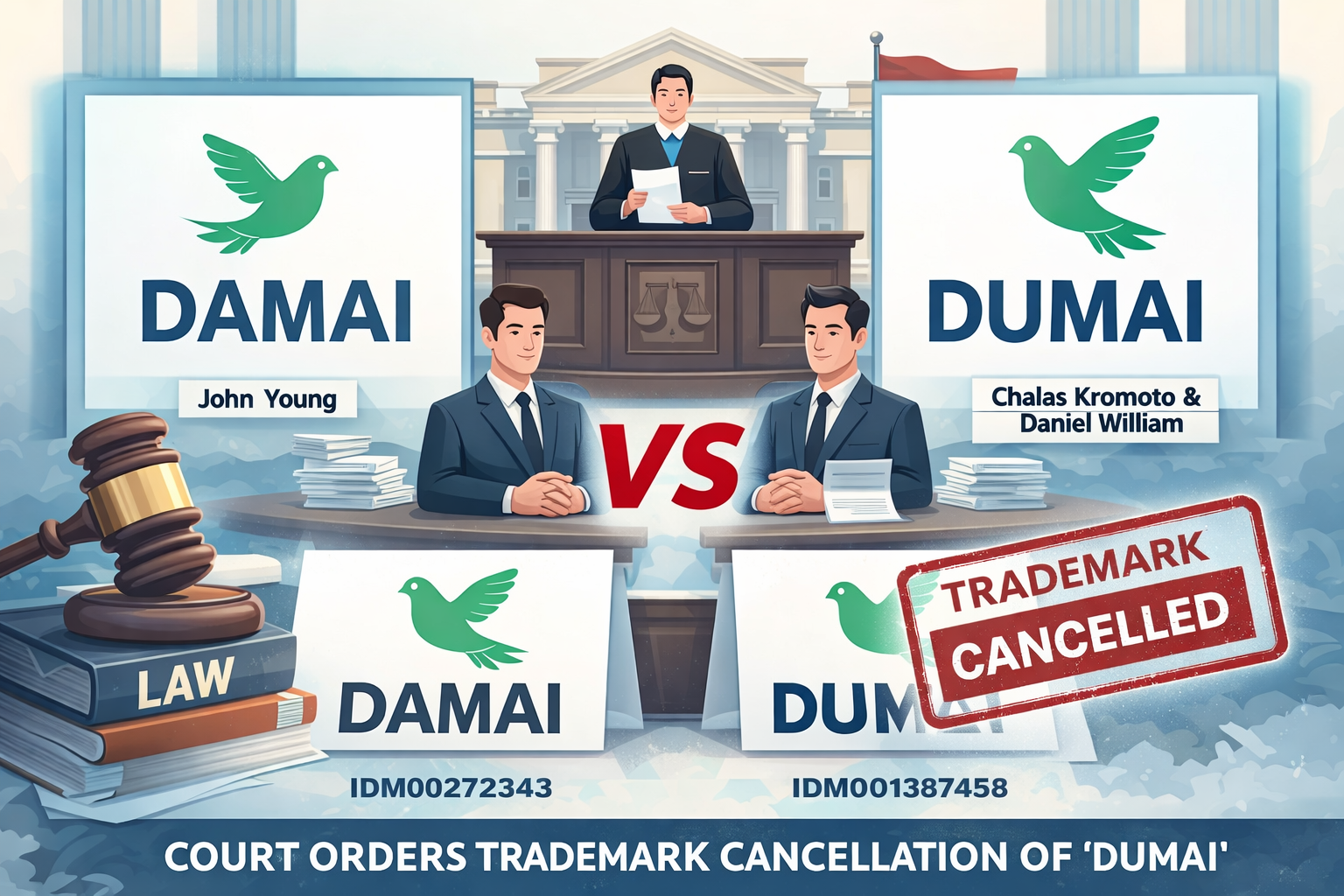
DAMAI vs DUMAI Trademark Case: Indonesian Commercial Court Orders Cancellation of Conflicting Mark
The trademark dispute between “DAMAI” and “DUMAI” has become a significant example of how Indonesian courts enforce trademark protection and combat bad faith registrations. The case underscores the importance of safeguarding brand identity, particularly in competitive industries such as packaging and plastic goods.
This legal battle culminated in a decisive ruling by the Commercial Court, providing clarity on trademark similarity and unfair competition under Indonesian law.
Parties Involved and Trademark Details
The lawsuit was filed by John Young, the registered owner of the trademark “DAMAI” (Registration No. IDM00272343), on February 20, 2009 and officially registered on September 21, 2010.
The defendants, Chalas Kromoto and Daniel William, registered the trademark “DUMAI” (Registration No. IDM001387458) on May 25, 2022, under Class 16, covering similar goods such as plastic packaging products.
Also named in the lawsuit was the Directorate General of Intellectual Property (DGIP) under the Ministry of Law and Human Rights of Indonesia, as the authority responsible for trademark registration.
Legal Basis of the Claim
The plaintiff based the claim on Law No. 20 of 2016 on Trademarks and Geographical Indications, particularly:
- Article 21, which prohibits trademarks that are substantially similar to existing registered marks or filed in bad faith
- Article 76, which allows trademark owners to file cancellation lawsuits against conflicting registrations
The plaintiff argued that the “DUMAI” trademark violated both provisions due to its similarity and the circumstances surrounding its registration.
Similarities Between DAMAI and DUMAI
A key issue in the case was whether the two trademarks were confusingly similar.
Visual Similarity
Both marks share similar visual characteristics, including logo structure and overall design impression, making them difficult to distinguish at a glance.
Phonetic Similarity
“DAMAI” and “DUMAI” are phonetically very close. The difference of one vowel does not significantly change pronunciation, especially in everyday commercial use.
Similar Goods Classification
Both trademarks are registered under Class 16, covering nearly identical products such as plastic bags and packaging materials, increasing the likelihood of consumer confusion.
Evidence of Bad Faith
The plaintiff also demonstrated that the “DUMAI” trademark was registered in bad faith. Indicators included:
- The deliberate alteration of only one letter from “DAMAI”
- Use in the same industry segment
- Adoption of similar branding elements
These factors suggested an intention to benefit from the reputation already established by the “DAMAI” trademark.
Commercial Court Decision
The Commercial Court at the Central Jakarta District Court ruled fully in favor of the plaintiff, issuing a decisive judgment that reinforces trademark protection in Indonesia.
In its ruling, the Court:
- Granted the plaintiff’s claim in its entirety
- Declared that the defendants acted in bad faith by registering the “DUMAI” trademark due to its imitation of the “DAMAI” mark
- Ordered the cancellation of the trademark “DUMAI” (Registration No. IDM001387458 dated May 25, 2022) from the General Register of Trademarks
- Instructed the Directorate General of Intellectual Property to implement the cancellation and execute the court’s decision in accordance with applicable laws
This ruling effectively removes the legal protection previously granted to the “DUMAI” trademark and restores the exclusivity of the “DAMAI” mark.
Implications for Businesses and Trademark Protection
This decision carries important implications for businesses operating in Indonesia:
- Strong Protection for Prior Registrants -The ruling confirms that earlier registered trademarks enjoy robust legal protection against later imitations.
- Strict Stance Against Bad Faith Filings – The court demonstrated zero tolerance for registrations intended to exploit existing brands.
- Importance of Due Diligence – Businesses must conduct thorough trademark searches before filing to avoid costly legal disputes.
- Legal Certainty in Trademark Enforcement – The decision strengthens confidence in Indonesia’s intellectual property system.
Conclusion
The dispute between John Young (DAMAI – IDM00272343) and Chalas Kromoto & Daniel William (DUMAI – IDM001387458) highlights the critical role of the judiciary in maintaining fair competition and protecting intellectual property rights.
By ordering the cancellation of the “DUMAI” trademark, the Commercial Court has sent a clear message: trademarks that imitate existing brands and are filed in bad faith will not be tolerated. This case serves as a valuable precedent for businesses and legal practitioners alike, emphasizing the need for originality, integrity, and compliance in trademark registration.